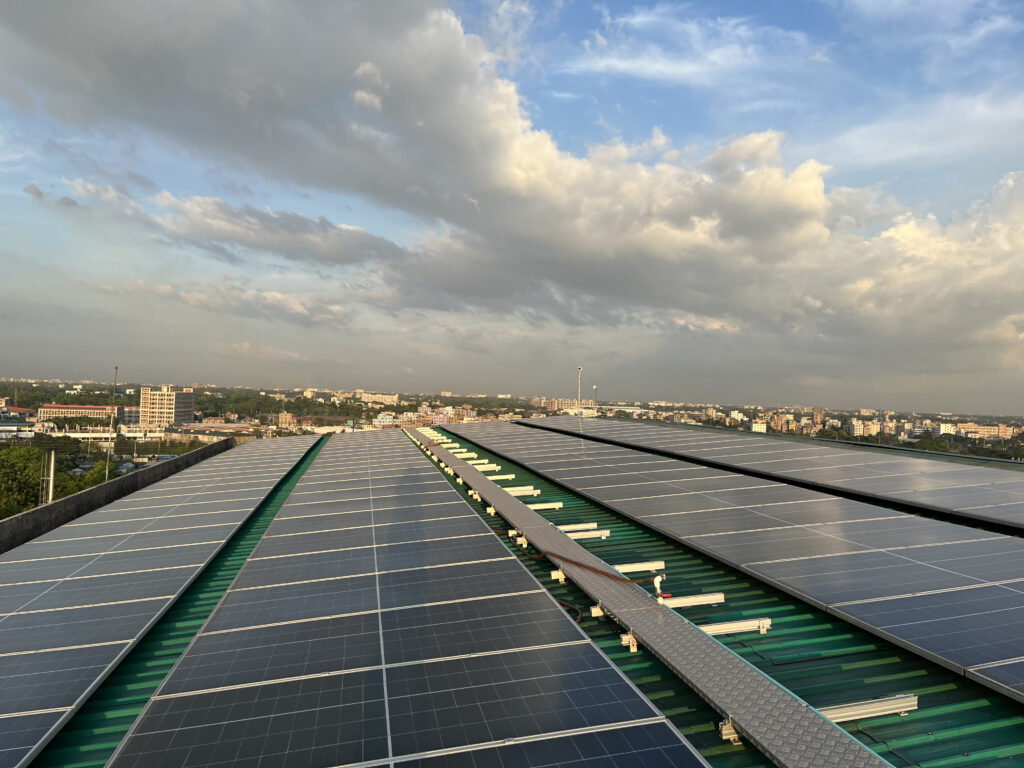
Quick answer: Your business site is worth assessing for solar when it has usable, sufficiently unshaded space, suitable physical infrastructure and a workable route to utility connection. Roof condition, electricity consumption and local requirements all matter—not just roof size. Start by collecting electricity records, site plans and roof information before requesting a detailed proposal. (epa.gov)
This checklist is written for U.S. business properties. Utility tariffs, export arrangements and permitting requirements must be checked for the specific address. It is an initial screening process, not engineering approval.
1. Establish the site, decision-makers and project boundaries
Before discussing panel numbers, record the property address, electricity utility, account holder and proposed installation location. Consider the roof, available ground and parking areas rather than assuming rooftop solar is the only option. EPA identifies all three as potential commercial project locations. (epa.gov)
Create a short project brief answering:
- Who owns the building and proposed installation area?
- Who pays the electricity bill?
- Which meter would the proposed system serve?
- What permissions would a tenant need from the property owner?
- Are relocation, redevelopment or demolition being considered?
- Is the objective lower electricity spending, renewable generation, or another clearly defined outcome?
For leased premises, ask the relevant parties to review roof access, installation rights and responsibilities before detailed procurement. Record unresolved permissions as open questions, not assumptions.
Practical check: Keep “physically suitable” separate from “financially worthwhile.” DOE explicitly distinguishes rooftop solar potential from economic potential: space and sunlight alone do not establish project value. (energy.gov)
2. Collect electricity bills and interval consumption data
As a practical starting point, request a complete recent year of electricity bills and the corresponding interval data, if available. Include every meter under consideration and flag periods when operations were unusual.
Interval data records consumption in successive time blocks. For example, PG&E publishes guidance for downloading 15-minute electricity usage through its account tools and Green Button. It also offers authorized sharing with third parties. Other utilities’ access routes and available intervals need separate confirmation. (pge.com)
Ask your utility for:
- Consumption files in a usable electronic format.
- Meter identifiers, units and interval duration.
- An explanation of timestamps and any estimated readings.
- The applicable tariff and billing-demand information.
Remember that kW measures power, while kWh measures energy used or generated over time. A monthly kWh total and a peak kW reading answer different questions. (eia.gov)
Before handing over the files, check for missing periods, duplicate timestamps and mismatched meters. Reconcile consumption totals against the corresponding bills, allowing for billing dates.
Common mistake: Treating annual consumption as enough to calculate savings. Commercial PV analysis needs the timing of building load and solar production alongside tariff information, particularly when demand charges apply. (docs.nlr.gov)
3. Compare operating hours with solar production
Write down working hours, weekend schedules, seasonal closures and major equipment operating times. Then ask the assessor to align measured consumption with modeled solar generation.
This comparison is more useful than simply asking whether annual generation could equal annual consumption. Commercial solar analysis examines load and production chronologically and applies the relevant electricity charges to each period. (docs.nlr.gov)
Worked comparison: a daytime warehouse and an evening-focused business
These are conceptual scenarios, not measured installations or savings forecasts.
| Assessment step | Daytime warehouse | Evening-focused business |
|---|---|---|
| Describe operations | Receiving, lighting and equipment operate mainly during daylight | Main activity occurs later; identify any daytime preparation or background loads |
| Check the evidence | Determine whether daytime consumption persists through weekends and quiet seasons | Determine how much consumption actually occurs while solar would generate |
| Test the design | Compare candidate systems with the measured daytime load | Compare candidate systems with daytime load and permitted exports |
| Ask the next question | Does the proposed size fit quieter operating periods? | What value would exported generation receive? |
The working hypothesis is that the warehouse may have greater direct-use overlap. But neither business type establishes feasibility by itself. An evening-focused operation could still have relevant daytime demand or a workable export arrangement. EPA’s screening framework considers both on-site consumption and an off-site purchaser for generation. (nepis.epa.gov)
Ask for separate estimates of direct use, exports and remaining grid purchases.
4. Map usable space and shading—not just total area
Provide an aerial image or site plan, then identify which areas are genuinely available for assessment. Record roof orientation, slope, dimensions and construction where known. DOE identifies size, shading, tilt, location and construction as factors affecting individual rooftop potential. (energy.gov)
Mark features that the assessor should investigate:
- Rooftop equipment, skylights, vents and parapets.
- Nearby trees and buildings.
- Access points and maintenance routes.
- Areas reserved for future equipment or expansion.
- Candidate ground areas and parking canopies.
Request a layout showing the exclusions used to determine usable area. DOE’s commercial screening guidance calls for shading assessment alongside available roof or ground space and a preliminary system-size estimate. (www1.eere.energy.gov)
Common mistake: Assuming one sunny photograph proves the site is unshaded. Ask for a shading assessment that addresses the relevant times of day and seasonal conditions.
For ground-mounted options, flag slope, drainage and competing site uses. EPA notes that grading uneven land can affect viability, while DOE recommends incorporating stormwater considerations into ground-mounted layouts. (epa.gov)
5. Review roof condition and structural capacity separately
A roof’s weatherproofing condition and the building’s load-bearing capacity are separate checks.
Collect the roof’s installation date, material, repair history, inspection reports, warranty documents and planned replacement schedule. EPA warns that replacing a roof during a solar system’s operating life may require removing and reinstalling the array, adding lifetime costs. (epa.gov)
Ask a qualified roofing professional to identify outstanding condition questions. Discuss the proposed mounting approach and warranty requirements with the relevant roofing parties before assuming compatibility.
For structural assessment, provide available drawings and records of alterations. DOE recommends evaluating rooftop suitability for compatibility, structural strength, age and wind exposure. Its design guidance also addresses snow and other site-specific weather risks. (energy.gov)
Do not infer spare structural capacity from roof appearance or building size. EPA’s screening guidance recommends structural-engineer consultation where capacity needs confirmation and consideration of reinforcement where additional capacity is unavailable. (nepis.epa.gov)
Practical check: Ask for two distinct conclusions:
- Is the roof condition compatible with the proposed installation timetable?
- Can the structure support the proposed system under the applicable design requirements?
Leave roof access and inspections to appropriately qualified personnel.

6. Check utility connection and local building requirements early
A promising layout is not permission to connect. EPA identifies utility interconnection standards, building and environmental permitting, and setbacks as factors affecting project location and timing. (epa.gov)
Ask the assessor to identify:
- The proposed electrical connection point.
- Existing electrical drawings and equipment information needed.
- The utility’s application route and any required studies.
- Whether exports would be permitted.
- Applicable export compensation and operating restrictions.
- Potential upgrade costs that remain unconfirmed.
Also identify the authority having jurisdiction: the department or official responsible for the relevant approvals.
Requirements are location-specific. New York City’s published guidance, for example, requires a Professional Engineer or Registered Architect to assess the building’s ability to carry the equipment and requires permits for building-connected solar systems. Its fire guidance separately addresses rooftop access and solar equipment. These are NYC examples, not nationwide rules. (nyc.gov)
Common mistake: Applying another jurisdiction’s pathway dimensions or permit checklist. Request confirmation of the adopted requirements and any project-specific interpretations for your address.
7. Document future changes before accepting a system size
Ask facilities and finance teams to list planned changes alongside the historical records:
- New production equipment or refrigeration.
- Electric vehicle charging.
- Changes in heating or cooling equipment.
- Energy-efficiency work.
- Additional shifts or reduced operating hours.
- Tenant changes, expansion or relocation.
For each item, record its expected operating schedule, implementation date, supporting evidence and approval status. Ask the assessor to keep confirmed changes separate from speculative growth.
Future property use also matters. EPA’s screening guidance asks whether buildings will remain in use and considers redevelopment plans and roof replacement timing. (nepis.epa.gov)
Request a current-load case and a clearly labeled future-load case rather than silently replacing measured consumption with a forecast. If information is unavailable, mark it “unknown” and identify who will investigate.
Practical check: Do not ask an assessor to optimize around equipment that has neither an approved purchase nor a credible operating schedule. Make the uncertainty visible before comparing proposals.
8. Give assessors one evidence pack and request a clear conclusion
Send every shortlisted assessor the same information. The following pack turns the screening questions into an actionable handover:
| Information to provide | Suggested internal lead |
|---|---|
| Bills, interval files, meter details and tariff documents | Finance or energy manager |
| Operating hours, closures and major load schedules | Facilities or operations |
| Plans, photographs and candidate installation areas | Property or facilities team |
| Roof reports, warranty records and replacement plans | Facilities and roofing adviser |
| Structural drawings and alteration records | Property team |
| Electrical drawings and existing equipment records | Facilities and qualified electrical adviser |
| Ownership permissions and future property plans | Owner or tenant representative |
| Confirmed and uncertain future load changes | Operations and finance |
DOE’s commercial screening checklist supports collecting shading, area, roof and economic information and investigating structural, electrical-connection and equipment-location issues. (www1.eere.energy.gov)
Request a written conclusion under three practical categories:
- Proceed: enough evidence exists to develop a detailed proposal.
- Proceed after checks: specific inspections, permissions or utility answers remain outstanding.
- Defer or reconsider: a major constraint needs resolution, or another installation location should be assessed.
Require the assessor to list assumptions, excluded costs and unresolved questions. Ask for modeled generation to be labeled as an estimate, not measured production; DOE describes tools such as PVWatts as estimating potential system performance. (energy.gov)
Your first decision is whether the evidence justifies detailed design—not how many panels to purchase.